

This article first appeared on The Drum website here.
Retailers like Walmart and Costco understand media & merchandising alignment is critical, write Andrew Lipsman & Jonathan Hopkins.
Retail media networks (RMNs) are apparently facing an existential crisis amid the rise of agentic commerce. A recent study by Bain and Emarketer found that top concerns among RMN leaders included Gen AI search and zero-click searches disrupting discovery and disintermediating the path to purchase.
But RMNs shouldn’t allow this existential dread to consume them. By tapping the substantial commercial value of their owned media assets – particularly their in-store media networks – retailers can control their own destiny.
“In an AI-shaped shopping world, in-store may become the most defensible part of the retail media stack. No LLM can replicate physical presence, sensory context, or real-time proximity to products,” writes Kiri Masters in The Drum: “When everything else becomes abstract and chronically online, the physical store becomes more valuable, not less. For many people, shopping remains a third place, something to do, a form of discovery and inspiration.”
According to our recent analysis, physical stores constitute the largest owned media opportunity among omnichannel retailers in grocery, specialty, and convenience.
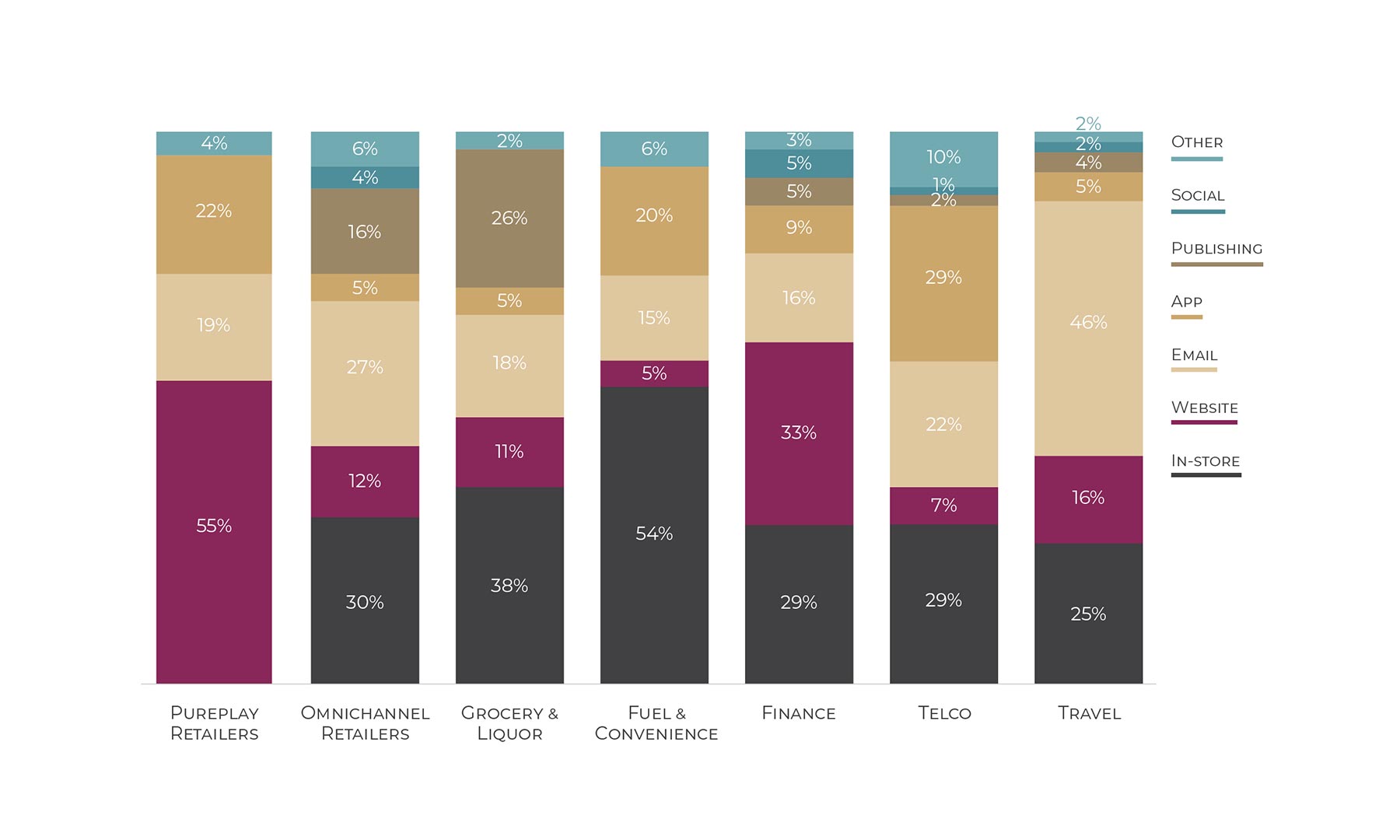
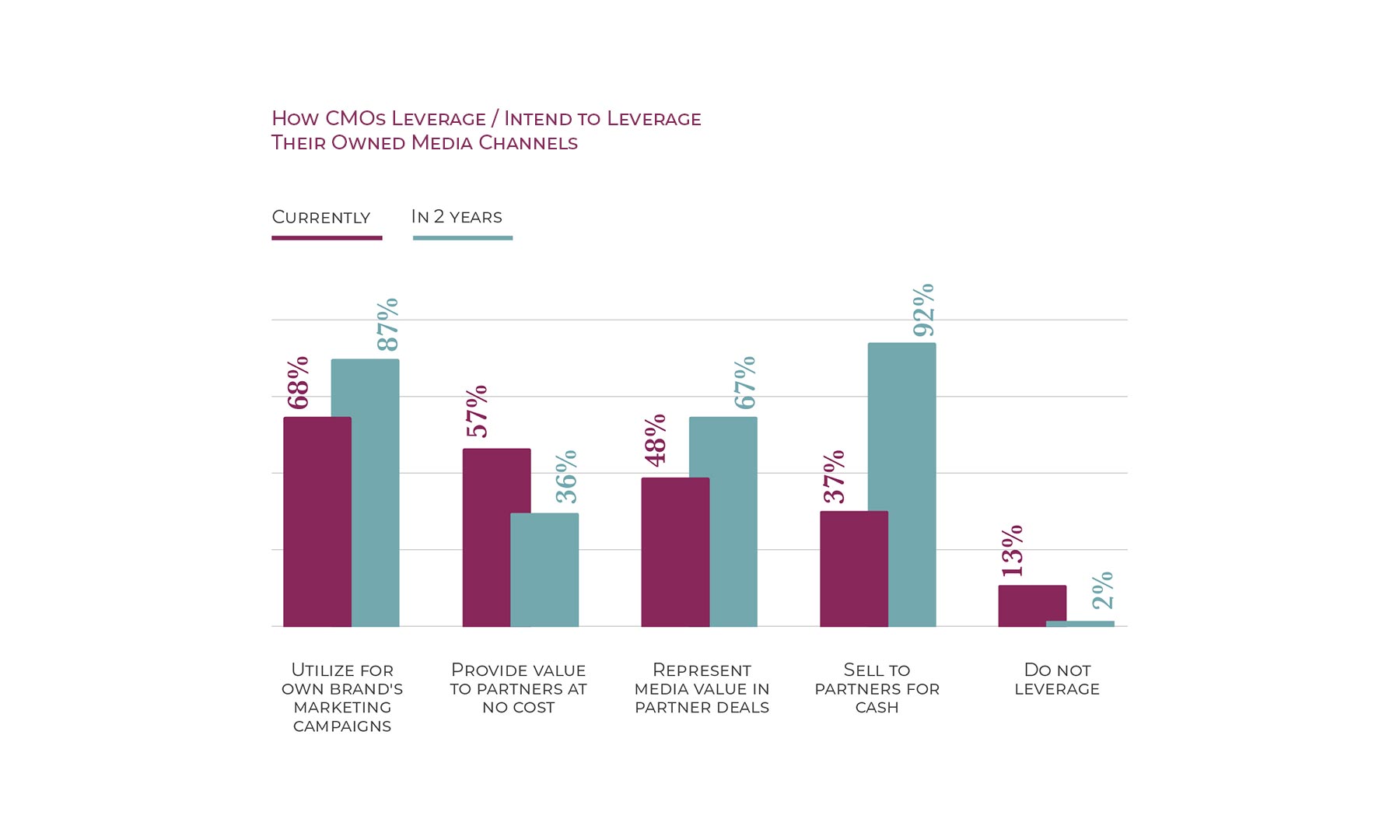
Yet in certain markets, such as the US, retailers have barely begun to commercialise these assets. In-store digital currently accounts for less than 1% of US retail media. Only 37% of CMOs indicate they’re currently selling media to brand partners – though 92% expect to be doing so in two years.
But that won’t happen unless retailers can resolve the most pressing internal conflict that impedes the progress of in-store retail media: alignment between media and merchandising teams.
Media & merchandising alignment begins at the top
Doug McMillon just exited Walmart after an extraordinary 12-year run that culminated with Walmart topping a $1tn market cap for the first time – and doubling over just the past year. One of the biggest drivers of this incredible stock run has been Walmart Connect, the $5bn ad business now fuelling the company’s surging operating profit.
It wasn’t easy to get to this point, and there was plenty of trial-and-error along the way. But McMillon persisted in tapping Walmart’s owned media to their full potential, while balancing the needs of the merchant organisation.
Across every omnichannel retailer, there’s an inherent tension between media and merchandising teams. Advertising is seen as a zero-sum game with both teams vying for precious online and in-store real estate.
RMNs are under intense pressure to scale revenue, which depends on available inventory and brand partnerships. But merchants, the power-brokers inside retail organisations, don’t want ads to detract from the customer experience (CX) and crimp sales. They’re also used to wielding owned media assets in supplier negotiations, and don’t want to give up a key tool in their toolkit.
McMillon came up through the ranks at Walmart as a merchant, but as CEO understood the potential of Walmart’s ads business to transform company economics. He would need to deftly navigate this tension if Walmart were to realise its potential for a step-change in profitability.
McMillon was CEO during Walmart’s earliest forays into retail media, including Walmart TV, dating back to the mid-2000s. Mike Hiatt, Walmart’s former director of in-store media networks, was in charge of this effort and encountered every organizational hurdle as he fought to stand up this early in-store media network. Clearing each of the hurdles was always easiest when higher-ups in the organisation bought in and provided the mandate to get it done.
“The most important requirement is executive leadership,” said Hiatt. “If executives are asking merchants and retail media to work together then it will happen. Aligning incentives for both teams is important. When merchants give up some control inside the store environment, they need to get something for that shift. And the more merchants can understand the challenges surrounding in-store media and vice versa, the better the relationship can be.”
When left to their own silos, media and merch teams will continue to see a zero-sum game. With executive sponsorship, it can be reframed as a ‘grow-the-pie’ opportunity and incentives can be aligned to make that happen.
Owned media is a ‘whole business’ opportunity
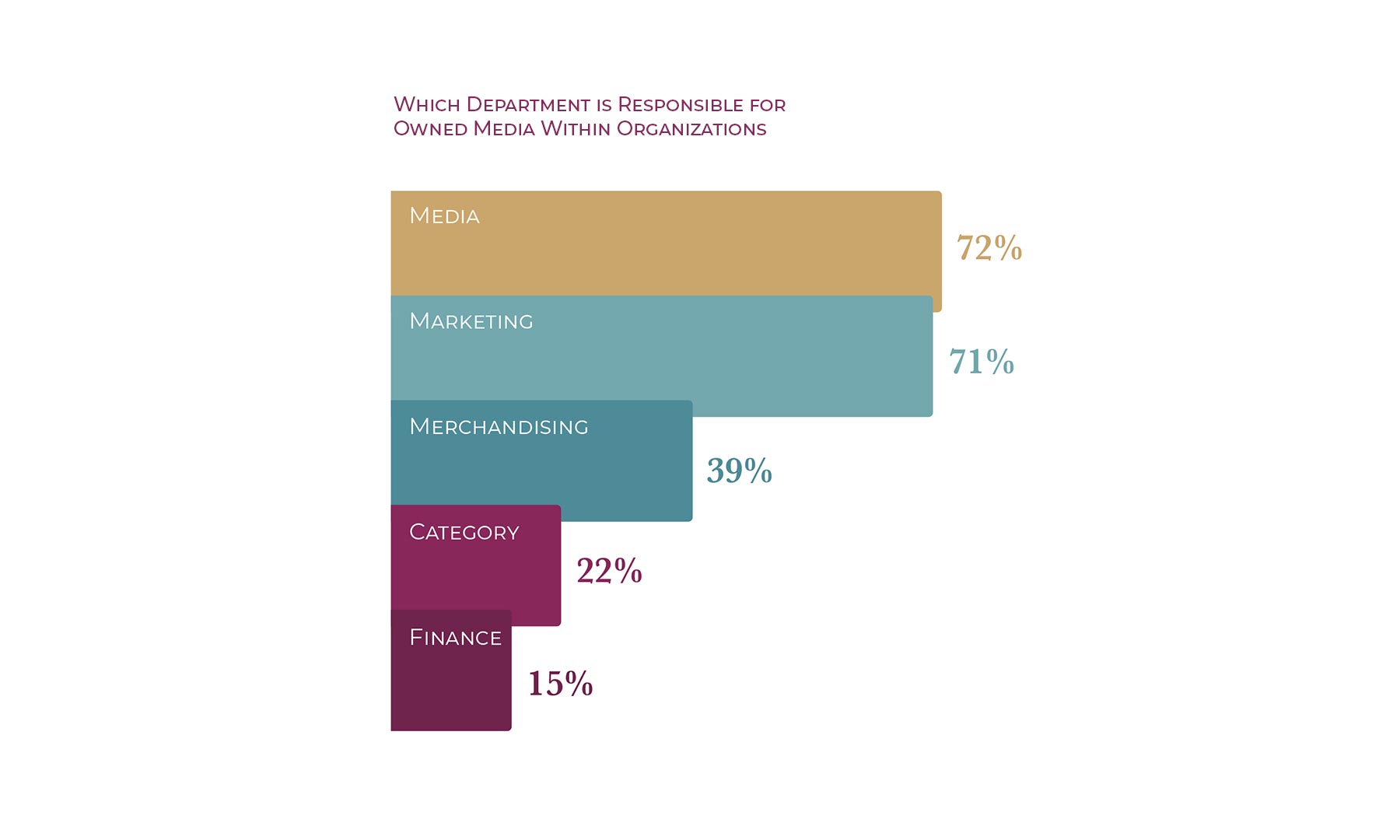
Owned media can be a unifying force inside retail orgs because it’s a shared asset with multiple use cases and overlapping responsibilities across departments like media, marketing, merchandising, category, and loyalty teams.
Owned media valuation is critical to cross-functional coordination because it allows every department to have a common view of the available assets and their explicit or implicit value to the organisation.
Next comes incentive alignment, which allows for negotiation between teams to ensure that everyone’s needs are met. And perhaps even realise that the departments are better aligned than they think!
The irony of merchandising and media tension is that the teams have the exact same objective: to increase receipts. RMNs’ ability to attract more ad spend depends on proving that their media drives brand sales. But they’ll need to do more than that to get merchant buy-in.
“In-store media pros need to provide pathways to increase basket size and category sales lift,” said Hiatt. “It can’t just be about maximising ad revenue.”
Retail-led media
Incentive alignment is critical but not sufficient, because cultural barriers also exist within organisations. One way for RMNs to break down these barriers is to demonstrate their commitment to merchandising’s goals.
At the NRF Big Show in January, Mark Williamson, Costco’s AVP of retail media, said this is how his team approaches it. One slide read “Costco Retail Media is Merchant Focused Because the Objective is to Sell Ads Merchandise.”
As a retail media network, Costco’s core owned media asset is the physical store, which attracts about 70 million US shoppers a month vs. 20 million for online. The RMN’s success depends heavily on how well it contributes to the in-store experience and drives receipts.
Further, Williamson understands that Costco’s customer value proposition is low prices, which promotes customer satisfaction and member retention, which drive the company’s bottom line. Retail media’s reason for being, therefore, must be to drive those KPIs.
Instituting a culture that requires his team to be merchant-oriented translates into ad experiences that are CX-positive and contribute high-margin revenue that can be reinvested in lower prices for customers. This, of course, makes it easier for merchants to achieve their sales goals.
Williamson is a smart guy, but he also leads from experience. You may not be surprised to discover that he worked alongside Hiatt at Sams Club in the early 2010s and came away with many of the same hard-earned lessons.
As retail media moves into physical retail, RMN leaders will need to integrate these lessons to control their own destiny. Whether agentic commerce constitutes a real threat remains to be seen, but either way RMNs’ long-term growth depends on their ability to leverage their most valuable owned media asset – the physical store.
Andrew Lipsman is a US-based independent analyst and consultant and writes the Media, Ads + Commerce newsletter on Substack. Jonathan Hopkins is the co-founder of Sonder.